Teaching
I teach American politics with a specialization in p, U.S. constitutional law, federal courts, federalism, and US immigration legal and policy history. —Over the course of more than 20 years of teaching, I’ve prioritized critical thinking, writing, interactive learning, and emphasizing real world relevance as the core pillars to my teaching philosophy.
I design my syllabi to foster deeper evaluation, analysis and reflection of the readings as our class together draws relevance from these to current politics. I’ve found that not only does this approach ensure students come to class having completed the assigned material, but that it also elevates the level of class discussion. I believe the learning process is a collaboration and conversation, not a one-way monologue, between an instructor and students and I use a modified Socratic method of short segments of lecture combined with liberal class discussion to reinforce concepts and make connections between ideas.
To reinforce the critical thinking skills, I have students submit multiple rounds of writing on the same assignment to help them learn that clear ideas and writing with rigorous reasoning is only achieved through an iterative process. All good writing is rewriting. I also help the students anticipate, identify, and answer counter-arguments to strengthen their own position.
In an academic inquiry, of course theory is important to master, but both of these are made more comprehensible and their gravity more profound if illustrated with real world examples. That’s why, for example, we’ve renamed our Introduction to American Politics course to Guns, Money, and Politics. Focusing on current politics of the day can be treacherous territory, but I always strive to create a respectful environment from day one in which no one has to agree with me, but everyone knows to disagree agreeably and to anchor their views in data and evidence, not ideological beliefs alone.
My aim is to foster thoughtful, engaged, civic minded citizens and residents.
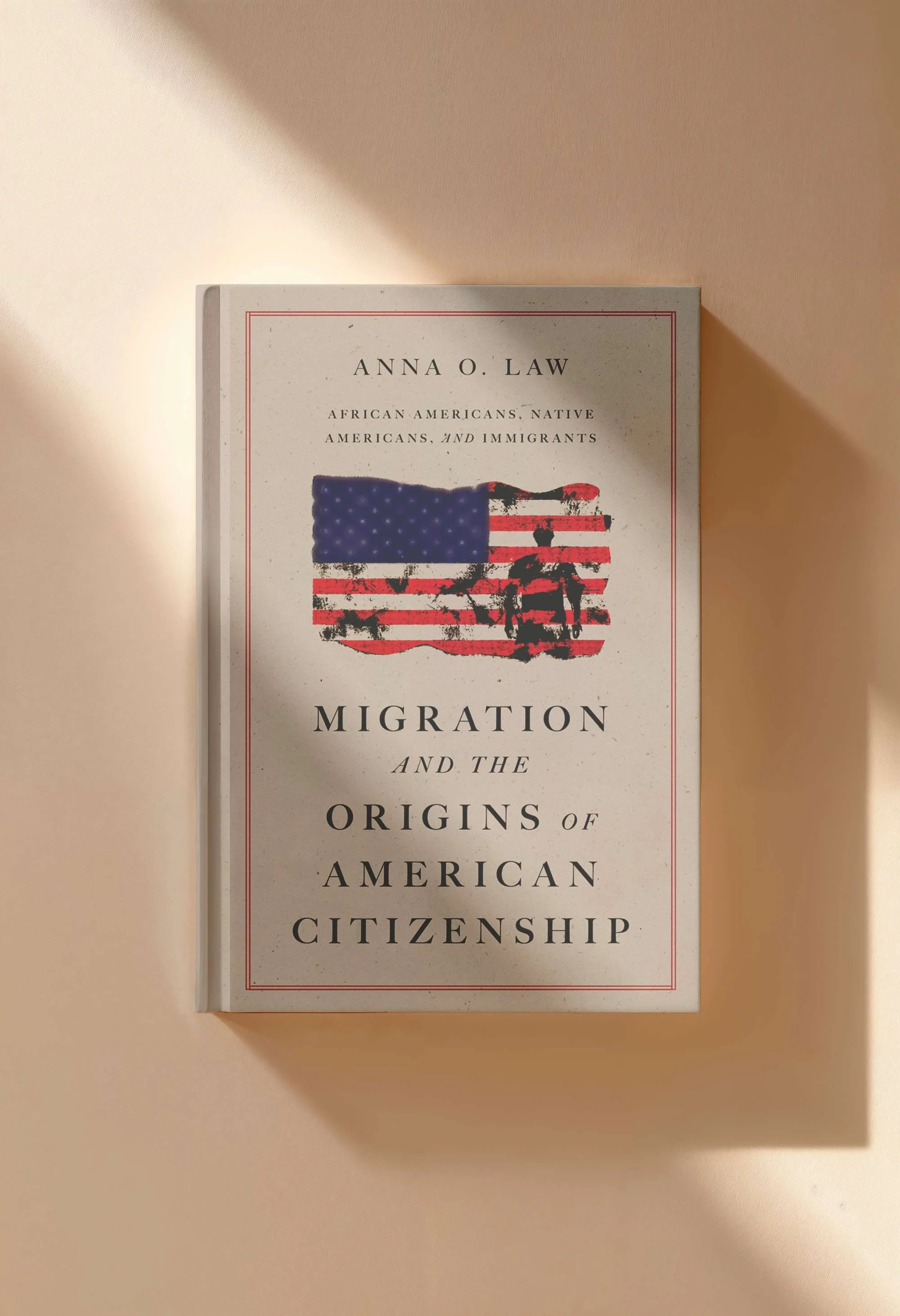
Check out my new book!
Below is a selection of courses and syllabi I teach:
POLS 1005: Guns, Money, and Politics
This is our department’s American politics survey course. Unlike a history course where events are typically taught in chronological sequence, we focus on the major institutions of American government and politics. Years ago, I integrated gun policy as a backdrop for our investigation of how American political institutions and politics work. Given the case study of guns, the students walk away not just with an understanding of how institutions such as the three branches of government, parties, interest groups—plus the media—operate, but also how the bottlenecks and pressure points in the American political system then enable and prevent legislative change. The larger goal of the course is to inspire more politically informed and engaged citizens.
POLS 3124: The American Jury System
This course assesses the role of the American jury in the criminal justice system. Although juries also serve in civil cases, the focus in this course is their participation in criminal trials. Rather than focusing on the pros and cons of a jury, the course takes a historical overview of the origins and evolution of the jury system. We examine the rationales and ways in which women and racial minorities were excluded from jury service and the effect on the institution. Ostensibly a democratic institution, we examine the mechanisms and procedures that prevent the jury from being truly democratic: access to counsel and expert witnesses, peremptory challenges, and consultants who promise to “stack the deck.” Unlike a law school course which would focus on legal opinions about the jury, this class has a section devoted to what social science research can tell us about how jury selection—and especially deliberations—take place.
Political Science 82001: The Politics of U.S. Immigration (graduate seminar)
Given the multifaceted nature of the migration phenomenon, this graduate-level course approaches the subject in an interdisciplinary and methodologically pluralistic way. The field ranges from the demography, economics, and history of migration, to law and all subfields of political science, through mainstream sociological approaches, and to the ethnography and oral history of migrants. Still, migration is also a fruitful for lens for exploring a multitude of political phenomenon ranging from the interaction of party and congressional politics, to the institutional evolution of the Supreme Court vis à vis the U.S. Courts of Appeals, and the limits and possibilities of using laws and access to public benefits to police the nation’s physical and cultural borders.
POLS 312X: Race and Ethnicity in the U.S. Criminal Justice System
This is a course I hope to teach in a future although there is race and ethnicity content in every one of my classes. The subject would allow me to integrate my own research on slavery, race/ethnicity, and law into my teaching. The course would begin with the institution of slavery and move to tracing the development of the U.S. criminal justice system, focusing on the racial disparities at every stage of the process from segregated neighborhoods, over-policing of minority communities, the disparities that plague sentencing and plea bargains, and culminating in the racial disparities in the US prison population and on death row.